

Recent Blog Posts
Divorce Process: Can I Stop My Divorce Case?
 Sometimes love does indeed conquer all. Sometimes a divorcing couple decides to give their marriage another chance and wants to put a halt to their divorce case. While a spouse who files for divorce is always free to dismiss the divorce case at any time, this may not always be a wise decision. What happens if you dismiss your divorce case, and what should you consider before putting the brakes on your Illinois divorce?
Dismissing Your Case – How Do You Do it and What Happens Next?
A civil or criminal lawsuit is able to be dismissed by the individual who filed the suit (the petitioner or plaintiff, depending on the type of case) with very few limitations. Usually when a lawsuit is dismissed voluntarily by the person who filed it, the case is dismissed without prejudice. This means that the plaintiff or petitioner is able to refile the case at a later date if he or she chooses. (By contrast, a dismissal with prejudice means that the plaintiff or petitioner cannot refile the lawsuit based upon the same facts – it is very rare for a divorce to be dismissed with prejudice). You cannot “dismiss” a divorce that has already been finalized by the court.
What Does Illinois’ New Spousal Maintenance Formula Mean for Your Divorce?
 When you are going through a divorce, you are faced with a host of financial issues. Often, spousal support can be a big question - will the court require one spouse to provide the other with ongoing financial assistance once their divorce is final? Until recently, it was up to the judge to make this decision on a case-by-case basis, after considering a variety of factors set out in the Illinois Marriage and Dissolution of Marriage Act. In an effort to make spousal support awards more consistent, however, the Illinois legislature updated the law, establishing a specific mathematical formula for calculating the amount and duration of a spousal maintenance award.
Will Courts Always Use This Formula Now?
Paternity Brings Both Rights and Responsibilities
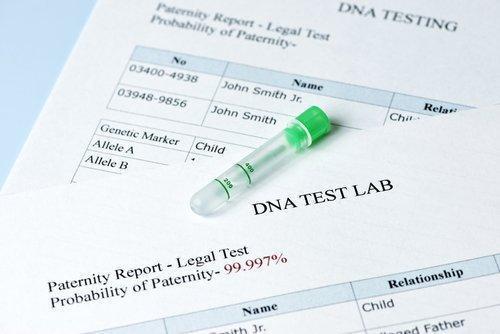 It is a biological fact that children have two parents. In some instances, however, paternity may be a concern. Parents must both be responsible for providing care for their children and both parents have rights. Whether a father wants to protect his parental rights, or needs to prove parenthood, experienced legal advocates are available to provide the legal counsel required. Paternity issues can become complex and require the services of a law firm with the experience to handle them.
Understanding Paternity
Paternity provides a legal relationship between a father and child. When a child is born to married parents, the husband is automatically assumed to be the father. Unmarried parents need to legally establish paternity. In Illinois, paternity is established in one of several ways. These include:
How Long is Child Support Obligation in Illinois?
 When a couple divorces or otherwise separates, both parents have a legal obligation to support their minor children. Under Illinois law, a parent’s child support obligation normally terminates when a child emancipates. Emancipation occurs when a child turns 18, or 19, if the child is still attending high school. However, there are circumstances in which a parent will be required to provide his or her child with some form of financial support beyond the age of emancipation. For this reason it is critical to have the aid of a family law attorney who understands Illinois child support laws and knows how to best represent the interests of a parent with a child who may need extended financial support.
Supporting the Disabled Child
Three Tips For Effective Co-Parenting after a Divorce
 After a divorce, even one that went smoothly, there can be a lot of anger, resentment, and sadness. But, when there are children involved, it is vital that both parents find a way to work together to be the best parents to those children. They are having their own difficulties adjusting to the divorce. Here are three tips for effectively co-parenting after a divorce.
Understand You Have Still a Relationship with Your Ex-Spouse
The divorce may have ended the marriage, but you and your ex are still in a relationship. You are co-parents to your children. That means you have to communicate and work together for the best interests of your children. This can be hard enough when parents have a strong marriage, but when a couple has been divorced it can be extra challenging.
Prenuptial Agreements in Illinois
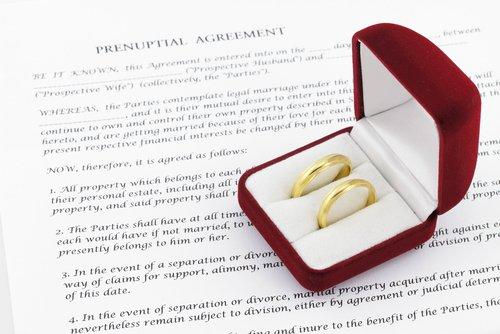 Most people have heard of prenuptial agreements, but many consider them something that happens in Hollywood or with high net-worth couples. However, there are many reasons ordinary couples can benefit from having a prenuptial agreement. While you may think you will never split up, the fact is over half of all marriages end in divorce.
What Is the Purpose of a Prenuptial Agreement?
A prenuptial agreement is an attempt for a couple to decide how their property and assets should be split up in case of a divorce. It is like a property settlement that is agreed to before anyone is even thinking about filing for a divorce.
Individuals with property, a business, or a potential inheritance often want to make sure these items do not become marital property. A prenuptial agreement is way for both spouses to keep the property they bring into the marriage separate.
Gambling and Divorce
 Problem gambling can destroy a marriage and family. The National Council on Problem Gambling reports that, in 2008 between one quarter and one half of spouses of compulsive gamblers have been abused by their spouse/the compulsive gambler. Furthermore, a 2002 study of emergency rooms across the nation found that the rate of domestic violence increased by 10.5 times when the victim’s intimate partner was found to be a problem gambler. And one 2000 study found that problem gambling is as serious of a risk factor for domestic violence as alcohol abuse.
When you decide to divorce your spouse because of problem gambling, what role will your partner’s gambling habits (and the behaviors and results that flow from these habits) play in the divorce proceedings?
Is Gambling a Ground for Seeking a “Fault-Based” Divorce?
Penalties for Failure to Pay Child Support
 Can someone really go to jail in Illinois if they fail to pay child support? It seems like the answer should be “no” – after all, if the court is concerned about child support obligations being paid, why would they lock obligors up in jail where they cannot make any payments? Unfortunately, as some obligors learn the hard way, courts are all too willing to put obligors who fail to pay their child support obligations in jail.
This can cause serious problems for the obligor parent, including losing his or her job. Learn more about why a court might order an obligor parent to jail for failing to make child support payments and how you might be able to avoid jail if you fall behind on your child support payments.
“I Thought Jail Was Only for Criminals!”
Splitting Siblings up in Child Custody Cases
 Divorce is difficult enough when there is one child. When two or more children are involved, the concerns about the effect of divorce on the children become magnified. Oftentimes, siblings may feel a stronger bond to different parents: while one child may feel an especially strong attachment to his mother, the sibling may feel a particularly close bond with her father. When a court is called upon to make a child custody determination, how does a court treat siblings if factors pull the court in conflicting directions?
A Refresher on Child Custody Determinations
As many are already familiar, a child custody determination as part of a separate suit or a divorce action will be made after the court considers the best interest of the child or children involved. In determining the best interest of the child in any given case, courts are free to consider a number of factors about the parents’ work and home life as well as the desires of the children (if the children are of a certain age and maturity level). None of the factors a court is to consider (as set out in the statutes) are determinative; instead the court is to take a “whole picture” view of the situation and circumstances.
Who Gets the Pets in a Divorce?
 Many people develop close emotional attachments to their pets. Forcing these individuals to spend any length of time away from their animal companions is (for them) akin to asking them to remain separated from their spouse or child. But Illinois divorce courts do not treat family pets in the same manner as they treat children, no matter how emotionally attached one or both parties are to the pet. How, then, does an Illinois court decide who gets the family dog (or other pet)?
Pets Are Treated as Property in an Illinois Divorce
Like many other jurisdictions throughout the United States, pets are treated as items of property. This means that during the divorce proceedings the court will determine which party gets to retain custody and control of the pet. Like other items of property divided during the divorce, there are no “visitation rights” when it comes to seeing the family pet after a divorce. In other words, if the court awards the family dog to your ex-spouse, it will not order that you be allowed regular opportunities to visit with the dog.